Monday, March 9, 2026
War girls. True stories. By Łukasz Modelski
Sunday, March 8, 2026
Warsaw Boy by Andrew Borowiec
The story starts before the war when Andrew was a young boy living with his father, a Polish army officer, and a governess in Kielce. We follow him to Cracow (Kraków) and then, through the September 1939 campaign in Lviv (Lwów), when the city defended itself from a German onslaught only to surrender to the Soviet army.
"On 18 September, the day after the Soviet intervention, the Luftwaffe littered the city with thousands of leaflets urging our garrison to surrender. Simultaneously, the commander of a Russian armoured brigade was busy telling a Polish envoy that the Red Army were there to fight the Germans and, in order to do so, required unhindered passage into Lwów. This, of course, was an enormous lie."Later, he escapes from the Soviet annexed Lviv to General Government, a German administered area for Poles. The Soviets and Nazis were allowing limited population exchange, but his governess had to lie about his identity to be let go - she said he was a child of Volksdeutsche parents, who sent him with her to Lviv for safety.
He is an eye-witness to the deportation of Polish Jews from Maków on 23 August 1942:
"[...] overnight Maków had been disfigured by a rash of printed wall posters. In German and Polish they ordered the entire Jewish population to assemble in the grounds of a sawmill near the railway station. Failure to report for Umsiedlung (resettlement) was punishable by death."And speaking with his father afterwards:
"[...] these men, women and children living alongside us had, with sullen acquiescence, assembled to start a foul journey towards an uncertain fate without a word of protest from themselves or anybody else. It was as if we all somehow accepted that the Germans had some unchallangeable right to do this. [...] I felt ashamed."
"'We could have worked together -' I began.Andrew took part in the Warsaw Uprising in August 1944. In the days before the uprising:
'Don't you think there were efforts to organize joint resistance? Do you think you're the only one who ever had the idea? All kinds of approaches were tried. But the elders of their community, those in the long black coats and with the pejsy, were against it. 'Let us be patient and God will reward us,' they were saying. Their people should tear them apart.'"
"[...] for several days now we had also been hearing comforting rumble of distant artillery as the Red Army and Wehrmacht exchanged fire outside Praga".
"'No doubt Warsaw already hears the sounds of the battle which is soon to bring her liberation,' cooed the broadcaster from the Union of Polish Patriots, the Communist front organisation that had set up shop in Lublin. 'Let those who have never bowed their heads to Hitlerite power join us for the decisive action.'"He describes the ill-executed start of the uprising, which took away the advantage of a surprise.
"But the Germans were also reminding the Poles of old battles and pleading a common cause. Warsaw Governor Ludwig Fischer, who earlier in the year had narrowly escaped an attempted assassination for the many executions he had ordered, had announced the call-up of all males [...] to help dig a deep anti-tank ditch build other fortifications [...]. 'Just as it did in 1920, Warsaw will defend itself and defeat the Bolshevik enemy,'"
Where he was not a witness himself, Andrew includes eye-witness accounts of other people, like Wanda Lurie, who survived Wola massacre - the killing of 40-50 thousand civilians in just 7 days of August 1944:
"I came last and kept in the background, continuing to let the others pass, in the hope that they would not kill a pregnant woman, but I was driven in with the last lot. In the yard I saw heaps of corpses three feet high, in several places. [...] There were about twenty people in our group, mostly children of ten to twelve. [...] They were all killed. [...]"The order to kill all was executed mainly by two groups of low-life scum, counting together about 2500 men: Oskar Dirlewanger's German and Volksdeutsche criminals, and Bronislaw Kaminski's RONA - Russian National Liberation Army - Russians, Ukrainians, Cossacks and Turkic-speaking Soviet soldiers recruited from German prisoner of war camps.
"With our backs turned to the insurgents we knelt or crouched and the Germans placed themselves on the ground behind us, or knelt on one knee, firing over our heads. [...]".
Monday, October 13, 2025
Poland at War by Zbigniew Parafianowicz
Polish title: "Polska na wojnie".
Worth reading.
Monday, August 11, 2025
Balcony Over Jerusalem by John Lyons
A Middle East Memoir - Israel, Palestine and Beyond. First published in 2017, updated in 2024.
This is a difficult book to read, because of the amount of evil it describes. The author is an Australian journalist who lived in Israel for six years with his family. The 2017 ending is prophetic in view of the ongoing genocide in Gaza:
As Israel continues to rule over an increasingly large population – a minority Jewish population (based on demographics) is now on the brink of controlling the lives and movements of a majority Palestinian population in Israel, the West Bank and Gaza – Israel’s occupation is, inevitably, doomed. The only question is whether what comes next will be an orderly, political process or a violent, chaotic one in which many people will die. I am by nature an eternal optimist. But after six years of living amid this conflict I fear that the latter is now almost inevitable.
![]() |
| Israeli soldiers walk through the Palestinian market of the Old City of Hebron. |
This book is essential for understanding not only the Middle East, but also the hasbara - the Israeli propaganda machine directed at foreigners, and especially the reporting of events related to Israel in the mainstream media and policies related to Israel and Jews in Australia. An interesting aspect is that even his Israeli acquaintance, and a fellow journalist Noga Tarnopolsky smeared his reputation anonymously (he investigated it, found out, and confronted her).
At the heart of this [Israeli] strategy is very clever lobbying and very clever political diplomacy. The Israelis make sure that in Europe and the US whatever you say about this conflict you risk paying a huge political price.’
It has become almost a rite of passage for deputy editors of any major Australian news outlet to be offered a ‘study trip’ to Israel. Colin Rubenstein, the head of AIJAC, told me that AIJAC has sent at least 600 Australian politicians, journalists, political advisers, senior public servants and student leaders on these trips over the last 15 years.
Today, I barely know an Australian newspaper executive who has not been on one of these trips.
What I had not realised when I first arrived in Israel was that wave after wave of journalists, editors, academics, student leaders and trade union officials were taken to hear the same spin from the same small group of people used to defend Israel’s policies in the West Bank – that is, the occupation through settlements.
I was coming to realise that when you write about Israel you are open to a level of abuse I had never seen before. As a journalist, you quickly learnt that you could have a very pleasant life if you wrote what Israel wanted you to. In contrast, if you wrote what you saw in front of you – such as the massive growth in Israeli settlements in the West Bank – your editors would be hit with complaints and your professionalism would be impugned.
Essentially, the Israeli Government, Army and lobby groups did not want the reality of the occupation reported. Of the many hours of discussions I had with my colleagues in the foreign media, one comment shocked me. It was when I asked Philippe Agret, the bureau chief of Agence France Press, a question. AFP is one of the most powerful news agencies in the world. It is highly regarded as credible and independent. It is famous for resisting pressure in whichever country it operates. Agret and I were discussing how some media groups censored their reporting out of Israel in a way that they did in no other country. I asked him who he thought was self-censoring out of Israel. Without hesitation, he replied: ‘Everybody.’
We’ve had decades of correspondents that, no matter how different they’ve been one from the other, no matter how talented they are or how many Pulitzer Prizes they have to their name, always end up being accused of being either anti-Semites or self-hating Jews. At some point, this seeps into the DNA of the newspaper. This is what you can expect if you go there – to have your integrity hurled back in your face every single day.’ But, said Haberman dryly, he finally discovered how to placate Israeli hardliners: ‘If I didn’t want to be accused of hating Israel, I should start every story with: “50 years after 6 million Jews died in the Holocaust, Israel yesterday did one thing or the other.”’
Sunday, June 22, 2025
Game of Mates, How Favours Bleed The Nation
I wrote this review years ago and kept it as a draft. This book is important to understand Australia. It explains a particular kind of corruption that does not show in international rankings, but is very much real and affects everyone living here. The most recent examples being the AUKUS submarine deal (A$375B over 30 years for 5 boats), the gas exports (unlike Norway, Qatar and other countries, we are giving most of our gas to multinational corporations for free), and the Queensland Train Manufacturing Program (65 trains for A$9.5B).
----------------------
Quotes:
"the story how groups of 'Mates' [...] managed to rob us, the Australian majority, of half of our wealth" - page 1.
"He now robs you of a hefty part of your superannuation [retirement savings]. He dodges taxes so you pay more. You pay higher interest rates on your mortgage, higher transport costs and higher medical costs" - page 2.
"[He] is not a solitary individual who finds a corruptible politician, but is a networker, able to forge coalitions with many individuals involved in different parts of the system leading to a Mafia-type hold on individual sectors" - page 7.
--------------------
What does not work, to stop the game of mates: more regulation, more transparency.
What works: removing grey gifts, for example from land rezoning: see ACT land system; introducing a public competitor.
--------------------
A few examples, not from the book, from Queensland:
1. NGR trains purchase: a 2014 LNP contract for A$4.4 billion for 75 trains (147m long, 445 seats, 140 km/h) and 32 year maintenance.
2. Airtrain - Brisbane Airport railway link - a 35 year concession given in 2001 by the Labor government to a private company for a monopoly of public transport access to the Brisbane airport in exchange for them building the link. The cost to build was $200m. The contract is secret. The only alternative to a private train is a car. There is no bus, no bike path, no foot path. There is even no foot path to a little air museum - Kingsford Smith Memorial. The get on or off the train at one of the two airport stations costs currently $15 extra compared to a same distance travel anywhere else on the network. 1.5 million people used Aitrain in 2011.
3. "NGR accessibility upgrades" - what is primarily, an A$4.47 million for an extra toilet on each of the 75 trains, a 2018 Labor government contract.
Compare with:
Austria:
15 trains and maintenance (150m long, 526 first-class seats, 200km/h) for €0.3B:
https://www.railway-technology.com/news/stadler-rolling-stock-contract-austria/
Italy:
Six years maintenance contract for ETR 500 Frecciarossa high-speed fleet of 59 trains for €0.15B:
https://www.railwaypro.com/wp/trenitalia-awards-hitachi-rail-a-maintenance-contract/
Poland:
71 trains for €0.53B:
https://www.railwaypro.com/wp/koleje-mazowieckie-signs-emus-supply-contract/
Sunday, July 23, 2023
The Reconstruction of Nations. Poland, Ukraine, Lithuania, Belarus, 1569-1999. A book by Timothy Snyder.
"The subjects of this book are the transformation of national ideas, the causes of ethnic cleansing, and the conditions for national reconciliation."
A detailed history of Polish-Lithuanian-Belarusian-Ukrainian relations since the Union of Lublin in 1569 which created the Polish-Lithuanian Commonwealth, to the end of the XX century when Poland joined NATO.
My takeaways: nationalism makes people do horrible things, the real history and especially individual history is messy and context is important, life is most important, forgiving is a necessary virtue, reconciliation is possible, even among peoples who committed ethnic cleansing on each other.
Errata - some of the errors I noticed:
The map of Postwar Eastern Europe circa 1945 on page XV... is 1951 circa 1945? There was a border change in 1951 between Poland and the USSR, and the "circa 1945" map shows the border after the 1951 change. This is a common error, that I think even most Poles in my generation don't know about:
Source: https://pl.wikipedia.org/wiki/Umowa_o_zmianie_granic_z_15_lutego_1951Friday, May 12, 2023
The F*ck-it List by John Niven
It's good. Really good. The best. It has an unlikely hero. It is dark. It has guns. It describes real recent events. It describes a likely future or what could have been. It's dystopian, but the American reality in 2020s is dystopian.
Audiobook read by Ian Porter.
Warning: 18+ content.
Friday, September 20, 2019
The Pragmatic Programmer Book by Andrew Hunt and David Thomas
As usual there are interesting comments about it on Hacker News:
https://news.ycombinator.com/item?id=21016664
The timeless list of tips:
https://pragprog.com/tips/
Sunday, December 9, 2018
Catch the Jew! by Tuvia Tenenbom
"One of the funnies books, I've read in years - and one of the most heartbreaking." - Yossi Klein Halevi.
"Tuvia Tenenbom is Michael Moore and Borat in one." - Die Welt.The funny part was lacking for me. Only one chapter - "Gate Eighteen" - out of 55, made me lough out loud - I will get back to it later.
This is a serious and thought-provoking book, but I think it is more Borat than Moore. It starts with Tuvia lying to a Turkish Airlines employee to get out of paying for extra luggage. She lets him off the hook on the condition that he does not tell anybody, so of course he puts it in a book. Great start.
Tuvia's modus operandi is to get trust of people using a fake identity and then show them in bad light, belittle, or make fun of them if he disagrees with them. It does not mean that I agree with people he talks to. It just means that I'm not sure I can trust Tuvia to be objective in how he presents them.
He generalizes Germans, Swiss, Europeans in a way that if the nationality was switched to Jews, would be called anti-Semitic. He does not challenge Knesset Member Moshe Feiglin when he says:
"The Pole sucks anti-Semitism from the breast of his mother, and his anti-Semitism is of the most vulgar kind, but with the German the story is different, and much more dangerous. The German is of an extremely high spiritual level, and in this the German is very similar to the Jew - only the opposite."Does Tuvia believe that or is that statement so obviously ridiculous that it does not need commenting? In other chapters when a quote is ridiculously stupid, he usually makes his opinion known, even if only by sarcasm. Not here.
According to Tuvia, all these volunteering Europeans, non-governmental organisations (NGOs), Red Cross, United Nations, Doctors Without Borders, are there in Israel, West Bank, and Gaza because of European anti-Semitism. From the last chapter "Gate Fifty-Five":
"The ICRC [Red Cross], of course, is not alone. UNRWA and the various European NGOs operating here are their [those who see Israel as "a bunch of animalistic devils"] natural allies. The age-old story of Europe's hatred of the Jew is continuing to this very day with just one minor adjustment: In the days of old, Europeans didn't have to get on a plane to fight Jews, who were then living as guests in their countries and at their mercy, but today they must travel the extra mile to satisfy their thirst to hurt the Jews."Heavy, isn't it?
There is a chapter where Tuvia makes us believe that stories of Jews destroying olive trees of Arabs are a fable, but later in "Gate Forty-One", talking to a settler in Yitzhar, we learn that, yes some Jewish settlers are actually doing it:
"You see the olive field at the foot of the hill, down there? We set it on fire. Yes, we do such things. Not all of us, but some of us. Why? Because these are the laws of war. We are in a war with the Arabs for control of this land."Tuvia dismisses these people as "not the normal Jews" - they behave like farmers elsewhere, not like Jews.
Ok, enough of that. Where is the funny part? There is Rabbi Batsri [sic] - (Rabbi David Batzri) who has quite a following, who prescribes fasting for various sins. For example, for infidelity 325 days, for murder 1199 days, and for masturbation... 4000 days! Luckily, you can pay instead: 1 shekel (27 cents US) for each day of fasting. That is quite expensive, especially if you are a man, so there is also a plan option: pay 101 shekels per month for 26 months (2626 shekels total) and you are in the clear, provided you don't sin in the meantime.
The Epilogue completes the book with a very pessimistic opinion:
"If logic is any guide, Israel will not survive. Besieged by hate from without and from within, no land can survive for very long."I believe in humanity, so I believe that Israel will survive and prosper, and that eventually the majority of people everywhere will think about themselves as humans first and foremost, and nationalities, languages, religions and physical features will not be considered worth fighting for.
Shalom.
p.s.
Tevia Tenenbom was paid to write this book by a German publishing house: Suhrkamp Verlag, which I think is ironic given that in the book he criticises Germans for sponsoring Israeli filmmakers and NGOs.
Wednesday, May 17, 2017
Clean Code by Robert C. Martin
One of the core programming books. All code examples are in Java.
Functions:
Should do one thing only.
One level of abstraction per function: making the code read like a top-down list of TO instructions is an effective technique to achieve that (the Stepdown Rule):
For example, for a non-configurable dashboard I could write:
"To create a Home Dashboard, get the System Status traffic light, Devices/Users vertical bar chart, and Workflow Pipeline horizontal bar chart."
The ideal number of arguments for a function is zero.
niladic - 0 arguments
monadic - 1 (monads)
dyadic - 2 (dyads)
triadic - 3 (triads)
polyadic - 3+ do not use
Why? More arguments = harder to read, harder to test: lots of combinations.
Flat, output arguments, and flags - ugly, confusing, terrible.
If your function needs to change the state of something, let it be the state of its owning object.
Temporal coupling - when a function can only be called at certain times.
Not having boolean arguments: but a boolean argument could prevent duplication: but the duplication can be solved by creating another function.
Because a function should do only one thing and a function with try/catch is doing error handling, it should only do error handling, i.e. in the try section it should just call one subfunction and in the catch it should handle all possible exceptions.
My argument against exceptions: they are like GOTO of old: arbitrarily move execution somewhere else in code. Also, handling exceptions in separate functions, as recommended, leads to abstraction leakage: the exception may be from many layers down.
My argument against small functions with only one or two arguments: class count and stack depth explosion: lots more classes, lots more layers.
My argument against "comments are always failures": comments are necessary when explaining the path taken: why did we code it this way. The author clarifies that a few pages later: intent comments are good.
Side effects are evil.
Funny parts:
G25: Replace magic numbers with named constants, except for well known numbers like 5280: "the number 5280 is so very well known and so unique a constant that readers would recognize it even if it stood alone on a page with no context surrounding it."
G31: hidden temporal coupling - when functions must be executed in order, but they don't use arguments/return values to show it. Have fun debugging that. :-)
Sunday, July 3, 2016
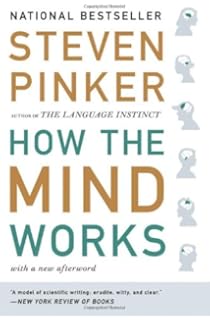
How The Mind Works by Steven Pinker
A good book. Sometimes a bit too wordy. Sometimes a bit off topic. Nevertheless, very interesting. It's not just about the mind. It is about evolution, genes, neural networks, optics, and mathematics of music. It is about reverse-engineering us. Why we act the way we act. How our senses work.
To understand sight, we have to look to optics and computer vision systems. To understand movement, we have to look to robotics. To understand sexual and familial feeling, we have to look to Mendelian genetics. To understand cooperation and conflict, we have to look to the mathematics of games and to economic modeling.
- Pregnancy sickness protects the developing baby from toxins: plant toxins in quantities that adults tolerate can cause birth defects
- Pregnancy sickness starts when the embryo is most vulnerable to teratogens (birth defect inducing chemicals)
- Pregnancy sickness ends when the embryo is past the critical stage of organ development and needs nutrients for further growth
- Women with more severe pregnancy sickness are less likely to miscarry
Confucius said "A common man marvels at uncommon things; a wise man marvels at the commonplace."
Steve Pinker is looking at commonplace human acts and wonders how they work, how could a robot do them.
Two related, interesting texts:
DNA seen through the eyes of a coder
The latter one is especially important. It may be describing how our intelligence works.
New observations allow AIXI to improve its world model, which over time gets better and better. This is the learning component. [...]
The goal of AIXI is to maximise its reward over its lifetime – that’s the planning part. [...]
[...] every interaction cycle consists of observation, learning, prediction, planning, decision, action and reward, followed by the next cycle.
Saturday, July 2, 2016
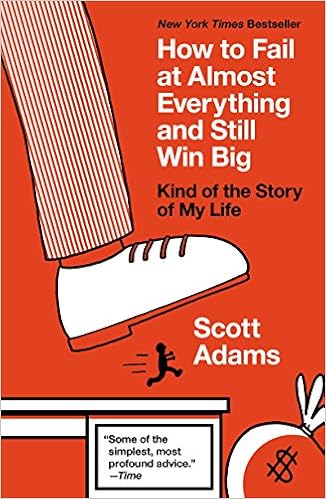
How to Fail at Almost Everything and Still Win Big by Scott Adams
Scott's recipe for happiness, condensed:
Healthy diet -> Energy -> Exercise -> More energy -> Learn new skills -> Flexible schedule
"Goals are for losers and systems are for winners"
Forcing yourself to do something, for example to eat right, or to exercise, takes a lot of willpower. The trick is to set up yourself and your environment, so the things that you want to achieve come without effort. How to do that? For eating: you could stack your fridge with healthy foods, use spices to make them taste great. For exercise: you need a routine - exercise must be done every day and must be pleasant. You should not overdo it the first day, and then be in pain for a few days.
I grew up in an environment that was setup for more healthy living:
- The pantry with the best food (sweets, sausages) was locked. My snacks were carrots and apples.
- I walked to school, shops, church. I took a train when going farther away.
- I played with other kids in the streets, in a park, and on school grounds.
Sunday, March 13, 2016
How to Talk So Kids Will Listen & Listen So Kids Will Talk by Adele Faber and Elaine Mazlish
Some of the techniques could also be used between adults, for example at work. To see if this works, I replaced "children" with "them". Here is the cheat sheet:
1. Helping Them Deal with Their Feelings
- Listen with full attention; don't half listen
- Acknowledge their feelings with a word "Oh", "Mmm", "I see"; don't question and don't give advice
- Give their feelings a name; don't deny the feeling
- Give them their wishes in fantasy; don't explain and argue using logic
2. Engaging Cooperation
- Describe the problem as a matter of fact, instead of: blaming, accusing, name-calling, threats, commands, lecturing, moralising, warnings, martyrdom statements, comparisons, sarcasm, prophecy
- Give information
- Say it with a single word
- Talk about your feelings
- Write a note
3. Alternatives to Punishment
- Point out a way to be helpful; don't yell, or threaten
- Express strong disapproval; don't attack character
- State your expectations
- Show how to make amends
- Offer a choice and then follow up with an action to prevent unwanted behaviour
- Allow to experience consequences, for example exclude from the activity next time
- Talk about their feelings and needs
- Talk about your feelings and needs
- Brainstorm solutions together
- Write down all ideas without evaluating
- Decide which ideas you both like/don't like/will follow through
4. Encourage Autonomy
- Let them make choices - as a practice
- Show respect for their struggle "it can be hard"; help, but don't do it for them
- Don't ask too many questions
- Don't rush to answer questions; encourage them to talk
- Encourage them to use external sources; so they don't need to depend on you
- Don't take away hope; let them explore and experience
5. Praise
Praise can make them doubt the praiser, lead to immediate denial, be threatening, make them focus on their weaknesses, create anxiety, be experienced as manipulation...
- Describe what you see or feel; don't evaluate "good", "great", "you are genius"
- Sum up using a single positive word: organisation, perseverance, self-control, friendship, loyalty, courage, willpower, flexibility, adaptability.
6. Free Them from Playing Roles
- Look for opportunities to show them a new picture of themselves
- Put them in situations where they can see themselves differently
- Let them overhear you say something positive about them
- Model the behaviour you'd like to see
- Be a storehouse for their special moments
- When they behave according to the old label, state your feelings and expectations
Friday, January 23, 2015
Sex At Dawn by Christopher Ryan & Cacilda Jethá
Thursday, September 18, 2014
Savage Continent by Keith Lowe
Keith's aims in writing the book were: "to break away from the narrow Western view that tends to dominate most writing on the period" and "to clear a path through the labyrinth of myths":
"Many of the 'massacres' I have investigated turn out, on closer inspection, to be far less dramatic than they are usually portrayed. Equally, some quite astonishing atrocities have been hushed up, or simply lost in the sweep of other historical events".
"Statistics really do matter, because they are often employed for political purposes. Some nations routinely exaggerate the crimes of their neighbours, either to distract attention from their own crimes or to further own national causes."
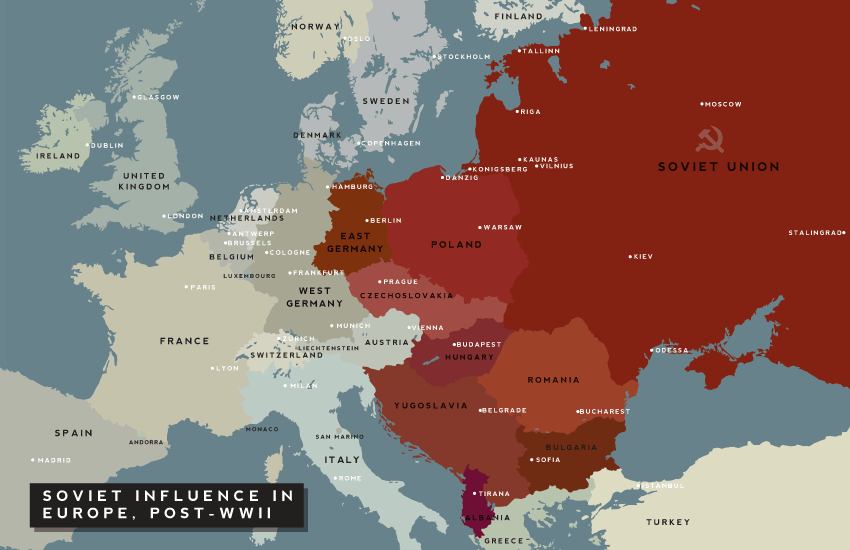
For many eastern Europeans the war truly ended only in the 1990s with the retreat of the Soviet Union armies and regaining of independence.
I learned many things from this book. For example, I learned:
- that Lithuanian partisans were fighting the Soviet Union well into the 1950s - the last partisan group in Lithuania was destroyed in 1956,
- that Jewish population in Bulgaria increased during the war,
- how the Greek communists lost the civil war, despite large popular support,
- how Stalin gradually took control of Romania and other central European countries.
| Central and Eastern Europe lost freedom after WWII for 50 years. |
Thursday, June 26, 2014
No Sex in the City by Randa Abdel-Fattah
It is a light book, similar in style to Marian Keyes, but less shocking. My daughter got it from her high school library. I'm not sure why I read it. It was lying on the table and somehow I picked it up, started reading, and got sucked into it.
It's a book for girls and young women. Maybe I like to look into the mysterious mind of the opposite sex sometimes. Anyway, it is a good read. It has a few relationship twists, a future mother in law from hell, a mild sexual harassment case, and a father with a gambling secret. It is the first book in which I saw "put out" used in sexual context.
Saturday, January 18, 2014
Mosaic by Diane Armstrong
Diane Armstrong was born Danuta Baldinger in July 1939 in Kraków, less than two months before the outbreak of World War II. Her father wanted to call her Diana, but the registration clerk did not let him. Children of Polish citizens usually must have names considered Polish at the time of registration. Exceptions are made when one parent is a foreigner. Today, the name "Diana" would not be a problem, but back in 1939 it was not considered a Polish name. A side note: I am actually assuming here that the author was born Danuta. In the family tree and throughout the book she uses the name Danusia, but I haven't heard about anyone who would have the diminutive form as the official name.
"At home [in Australia] my parents spoke Polish to each other, but soon I was replying in English. Changing your language in childhood is not just a linguistic loss. Apart from losing a world of subtleties, nuances and connotations of the words themselves, you also lose part of yourself. Language and culture influence the way you form thoughts and express feelings. English is more concise, blunt and matter-of-fact; it has a larger vocabulary but a smaller range of emotional expression than Polish, which is the language of affection. Nowhere is this contrast more obvious than in people's first names. While in English we truncate them into impersonal monosyllables devoid of tenderness, in Polish names are lengthened by endings which in themselves are endearments. Danuta, for instance, became affectionately softened to Danutka, Danusia, Danushka and Daneczka."Mosaic is a story of the author's family. Starting in Kraków in 1890 and ending in 1990s in Australia. The story is mostly chronological, but it is freely jumping through time, and between people and places. Without an index and only with numbered chapters it is hard to navigate its almost 600 pages.
Danusia's personal experiences and stories told or passed in letters or memoirs by members of the extended family are augmented by well researched historical facts. Sometimes, I wished for a bit more background, but it's ok, this is not strictly a history book. For example, a quota system for Jewish students in pre-war Poland is mentioned a few times, but we don't learn much about it. Here is the starting point, if you are interested: https://en.wikipedia.org/wiki/Numerus_clausus#Numerus_clausus_in_Poland
We see communities that no longer exist, and homes that often still do, but with different occupants. It is a moving journey, often heartbreaking, but also uplifting. There are bad and cruel characters there, but there are also friendly ones.
"Centuries of Jewish blood runs silently and secretly through millions of Polish veins [...]"Diane's immediate family miraculously survived the war in Poland posing as Catholic Poles. Diane's father got a false identity document in March 1942 and since then he was known as Henryk Bogusławski.
"It was hard for a Jew to find a hiding place in Poland in 1942 as for a deer to hide from a pack of wolves on a treeless plain. Our only hope of survival was to pose as Catholics, [...]"Diane's parents told her that she was Jewish only when she was 7 years old. They migrated to Australia in 1948.
Diane's father left this grave warning shortly before his death:
"Jews should never become complacent, even in a tolerant society like Australia. All Jewish children should know that anti-Semitism can occur anywhere at any time so that they're prepared."Official website: http://dianearmstrong.com/mosaic.htm
Saturday, June 8, 2013
Scarecrow by Matthew Reilly
Let me try a few random pages:
- page 33 - headhunters are chasing captain Shane Schofield, aka Scarecrow, inside an abandoned Russian submarine;
- page 77 - Gant Fox, Scarecrow's girlfriend, and her team, enter a tunnel into a mine full of terrorists;
- page 156 - Scarecrow rescues Gant from headhunters inside a Hercules transport plane;
- page 281 - a quiet moment, while flying Black Raven (Su-37), Rufus tells Mother how he met captain Knight;
- page 346 - Scarecrow is on a supertanker where multiple fights are going on: Nigerian Presidential Guard, Israeli commandos, headhunters;
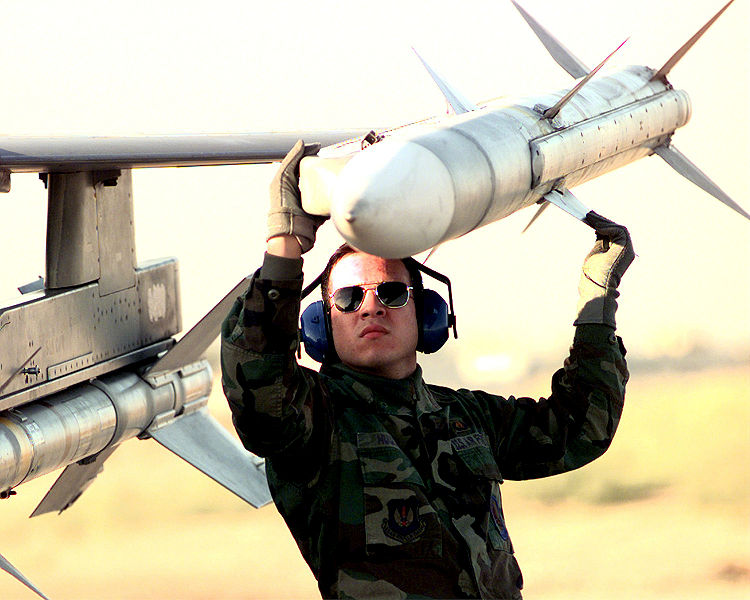
- page 415 - Knight, who was flying a rocket plane (X-15) put his plane in a path of an AMRAAM rocket that was about to hit Scarecrow in his X-15.
Friday, May 3, 2013
Karate-Do Nyūmon
Karate-Do Nyūmon - "A passage through the gates of the karate way" by Gichin Funakoshi, translated by John Teramoto. First published in Japanese in December, 1943.
Gichin Funakoshi is known as the founder of Shōtōkan-ryu, the most popular style of karate, which takes its name from master Funakoshi's pen-name.
"As far as I know, the only styles that have been handed down from the past are the Gōjū-ryū of Master Miyagi and the Shito-ryu of Master Mabuni. I have never given a name to the karate I am studying, but some of my students call it Shotokan-ryū."Karate-dō means: the way (dō) of the empty (kara) hand (te).
Note: the dash above 'o' signifies a long 'o' sound and is called a macron.
There are a few interesting stories in that book about master Funakoshi's teachers in Okinawa: Yasutsune Azato and Yasutsune Itosu, and about those who came before them. There is a chapter about history of karate, and a detailed description of master Funakoshi's kata (formal exercise): Ten no Kata.
The term karate in the meaning of empty hand was introduced by master Funakoshi after he arrived in Tokyo in 1922. Before that, in Okinawa, he used terms Okinawa-te and To-de. Okinawa Prefecture was at one time known as Kingdom of the Ryukyus. Kara also means 'China' in Japanese, and some translate karate as Chinese hand. Okinawa had close relations with China and 'Chinese' had an additional meaning of 'fine quality'.
Master Funakoshi gives six reasons to use the character meaning 'empty' instead of 'China':
1. There were no written records, so kara could mean both 'empty' and 'China'.
2. Karate written with character for China could be confused with chinese martial art of kenpō. They are similar, but not the same.
3. Karate is a Japanese art form, so 'China' character should not be used.
4. 'Empty' implies weaponless, empty-handed self-defense, which is a good characterization of karate.
5. 'Empty': karateka must rid himself of self-centeredness and greed.
6. Emptiness is the true form of the universe.
How to make a traditional outdoor makiwara (striking post):
Use Japanese cypress or cedar wood.
2.1 meters long and 9 cm wide.
9 cm thick at the bottom, 1.6cm at the top. Note: You can make two makiwaras from a 9cm by 9cm block.
1/3 buried in the ground.
The pad is made from straw and then softened with a mallet.
A cloth can be used to soften the pad.
The pad has to be protected from rain.
Karate Glossary
Hand:
seiken - regular fist
uraken - back fist
shuken - hand fist
ippon-ken - single-point index finger fist
chūkōken/nakadakaken - single-point middle finger fist
tettsui - iron hammer
nukite - spear hand, same as shihon nukite
shihon nukite - four-finger spear hand
nihon nukite - two-finger spear hand
ippon nukite - one-finger spear hand
shutō - sword hand
haishu - back of the hand
Foot:
koshi - ball of the foot
sokutō - sword foot, striking with outside edge of the foot, close to the heel
tsumasaki - toe tips
enshō - back of the heel
sokkō - top of the foot
sokutei - sole of the foot, used for sweeping opponent's foot
Elbow:
empi - elbow
ushiro empi - rear elbow
yoko empi - side elbow
shita empi - low elbow
mawashi empi - round elbow
Stance:
heisoku-dachi - feet together stance; formal attention stance
musubi-dachi - feet together, toes out; informal attention stance
hachinoji-dachi - open leg stance, like musubi-dachi but feet 30cm apart; many kata start and end in this stance; hachi means eight - the stance resembles the Chinese character for eight: 八
zenkutsu-dachi or zenkutsu - front stance
migi zenkutsu - zenkutsu with right leg forward
hidari zenkutsu - zenkutsu with left leg forward
kōkutsu-dachi - back stance
fudō-dachi - immovable stance
kiba-dachi - horse riding stance
Command:
yōi - ready
yame - stop
rei - bow
Other:
omote - front
ura - back
kenpō - lit. fist method, Chinese martial art
budō - martial arts
kata - formal exercise
kihon - basics
kumite - sparring
karateka - karate practitioner
uke - block
soto-uke - outside block
uchi-uke - inside block
age-uke - rising block
zuki - punch
uchi - strike
oi-zuki - lit. pursuing punch, aka: front punch, lunge punch, straight punch, stepping punch
jun-zuki - front punch, shoulders 90 degrees to the arm
kizami-zuki - front punch, shoulders in line with the arm
gyaku-zuki - reverse punch
morote-zuki - double punch
teisho-zuki - palm-heel punch
kimete - focus
chūdan - middle level
jōdan - upper level
gedan - lower level
barai - sweep
ryū - style
fū - type
tanden - center of gravity in the lower abdomen
ichi - one
ni - two
san - three
ichidan - first grade, first black belt rank
kiai - spirit
maai - distance
kawasu - turning
kawashi - interaction, step in and turn to avoid an attack
yarijutsu - spear techniques
bōjutsu - stick techniques
kuchi bushi - "mouth" warrior
bushidō - the way of the warrior
makiwara - sheared straw - striking post
Saturday, December 29, 2012
Bloodlands by Timothy Snyder
Bloodlands. Europe between Hitler and Stalin. Timothy Snyder. Published in 2010.
I have been trying to finish the review of this book for over two weeks now. It is hard for me, because it is personal. I am Polish. I grew up in a small town which, like most towns in Poland, had a significant Jewish population before the war. I knew nothing about it at the time. For me the 'ghetto' was only a geographical location in the centre of the town, where the farmer's market was. There were no orthodox Jews anywhere to be seen and I did not know anybody who was Jewish.
I also lived in the eastern part of Warsaw, called Praga, which was not razed to the ground after Warsaw Uprising of 1944, because it was already under Soviet control. In Praga, even now, almost 70 years after the war, you can find pre-war buildings ridden with bullet holes from 1939 or 1944. In all of Warsaw, if you look, you will find plaques and monuments commemorating places where people had been executed or where battles had been fought. Every year on August 1st, the city stops for a minute to commemorate Warsaw Uprising of 1944. The 1943 Warsaw Ghetto Uprising is remembered as well and Generalplan Ost is part of the national psyche. The last war is hard to forget if you live in Poland.
This book, however, is not really about the war. This book is about 14 million murders committed before and during the war, by the regimes of Adolf Hitler and Josef Stalin, on the lands that they both controlled. Timothy Snyder wants us to think about the victims as 14 million "times one" so we don't forget that they were individuals, with names and stories to tell.
Bloodlands provides context and factual corrections to the national stories, which tend to be one-sided, skewed, or exaggerated. Hundreds of millions of children were "educated" about these events to fit the communist or national version of history.
"What begins as competitive martyrology can end with martyrological imperialism. The wars for Yugoslavia of the 1990s began, in part, because Serbs believed that far larger numbers of their fellows had been killed in the Second World War than was the case. When history is removed, numbers go upward and memories go inward, to all of our peril."This book uses statistics extensively. For example, to illustrate the point that generalisations are often wrong, and context and individual circumstances are important:
"A non-Jewish Pole in Warsaw, alive in 1933 had about the same chances of living until 1945 as a Jew in Germany alive in 1933."It is a balanced book, and it doesn't try to agitate one group against another. It tries to dispel some myths using hard historical facts. The above statement, for example, is quickly followed by:
"[...] a Jew in Poland was about fifteen times more likely to be deliberately killed during the war than a non-Jewish Pole."Timothy Snyder in 500 pages describes so many stories of mass murder that the descriptions sometimes are very succinct. Longer works have been written, and movies made about events that take only a few sentences in Bloodlands - like the story of the Bielski partisans.
If you quickly divide people into good and bad, this book may slow you down a bit. For example, it explains that in the areas of the current Belarus, if you wanted to live, you often had to join Soviet partisans or German police, and you often did not have much choice about who to join - it could be a matter of which forces "visited" your village first. The extreme form of "collaboration" or negative opportunism, was the Judenrat and the Jewish police in the ghettos. Before you accuse somebody of "collaborating" with the enemy, think what you would do in the circumstances. But to do that, you need to know about the circumstances, and that's where Timothy Snyder helps.
14,000,000 x 1 is a well researched, but conservative number. Active soldiers, and others whose death cannot be attributed directly to a deliberate act of murder by Hitler's or Stalin's policies are not counted:
"I therefore generally exclude from the count the people who died of exertion or disease or malnutrition in concentration camps or during deportations, evacuations, or flight from armies. I also exclude people who died as forced laborers. I am not counting people who died of hunger as a result of wartime shortfalls, or civilians who died in bombings or as a result of other acts of war."They are excluded from the main count, but their stories and numbers of victims, although not the main theme of Bloodlands, are noted. The count, in approximate chronological order, is as follows:
"[...] 3.3 million Soviet citizens (mostly Ukrainians) deliberately starved by their own government in Soviet Ukraine in 1932-1933; three hundred thousand Soviet Citizens (mostly Poles and Ukrainians) shot by their own government in the western USSR among the roughly seven hundred thousand victims of the Great Terror of 1937-1938; two hundred thousand Polish citizens (mostly Poles) shot by German and Soviet forces in occupied Poland in 1939-1941; 4.2 million Soviet citizens (largely Russians, Belarussians, and Ukrainians) starved by German occupiers in 1941-1944; 5.4 million Jews (most of them Polish or Soviet citizens) gassed or shot by the Germans in 1941-1944; and seven hundred thousand civilians (mostly Belarussians and Poles) shot by the Germans in "reprisals" chiefly in Belarus and Warsaw in 1941-1944."Bloodlands describes reality that is complicated and soul crushing. Reality of state lies, betrayal, fear, and torture. Reality created by two strongly minded people who had millions of followers, who believed that they were doing good, that they had noble goals, and that means justify the ends.
"To dismiss the Nazis or the Soviets as beyond human concern or historical understanding is to fall into their moral trap. The safer route is to realize that their motives for mass killing, however revolting to us, made sense to them."Enough Germans liked Hitler and the Nazi party to vote them into a political stronghold from which they could not be removed peacefully. Hitler wanted to unite and protect all Germans, so they could never again be humiliated by the French, or overran by the Slavs. He wanted Germany to be ethnically pure, economically strong, providing decent living conditions and stable employment to all workers. He wanted to expand the living space for the quickly growing "noble" race of Aryans. He hated Jews, because he thought they were immoral, used manipulative rhetoric tactics, and were loyal to other Jews rather than to the state. A large part of the society didn't mind... Would you?
Communists had initially the support of millions of Russian peasants and workers, who benefited from the overthrow of the capitalist regime by seizing private and church land, and by getting shorter working hours and higher wages. Stalin, at least publicly, followed Lenin's goal of building a paradise on earth, where everybody would give to the society as much as they could, and everybody would get from the society as much as they needed. All income from land distributed for public purposes, progressive taxes, no inheritance, free education for children, equality... Isn't that nice?
If you think that these things could not occur today, then how do you explain that, less than 10 years ago, we let one strongly minded leader start an unprovoked war which resulted in at least 109,032 deaths? Because the goal was noble?