Showing posts with label life. Show all posts

Sunday, August 16, 2026

Jewish History - Jewish Religion by Israel Shahak

Subtitle: The Weight of Three Thousand Years. First published in 1994.


Israel Shahak was born in Warsaw, like me, only some 40 years earlier. He survived the Holocaust, was liberated from the Bergen-Belsen concentration camp by the British, and with his mother emigrated to Palestine. He went to a religious school in Israel, served in the IDF, studied and taught chemistry, got a doctorate at Hebrew University, studied at Stanford, became a human rights defender and author. 

This an important book about the history and the present of Judaism. This book is also useful in understanding the history of Israel and Zionism. Even though it was written over 30 years ago, it still helps us understand what is going on in Israel and in occupied-Palestine today, and even the most recent actions and policies regarding Israel in countries like the US, the UK, and Australia. 

This book is primarily addressed to Jews in Israel and in diaspora. It's a call for action:

"Therefore, the real test facing both Israeli and diaspora Jews is the test of their self-criticism which must include the critique of the Jewish past. The most important part of such a critique must be detailed and honest confrontation of the Jewish attitude to non-Jews. This is what many Jews justly demand from non-Jews: to confront their own past and so become aware of the discrimination and persecutions inflicted on the Jews. In the last 40 years the number of non-Jews killed by Jews is by far greater than the number of the Jews killed by non-Jews. The extent of the persecution and discrimination against non-Jews inflicted by the 'Jewish state' with the support of organised diaspora Jews is also enormously greater than the suffering inflicted on Jews by regimes hostile to them. Although the struggle against antisemitism (and of all other forms of racism) should never cease, the struggle against Jewish chauvinism and exclusivism, which must include a critique of classical Judaism is now of equal or greater importance."

This quote by Theodor Herzl - the father of Zionism, perplexed me - he wrote in 1896 in Der Judenstaat (The Jewish State) on why Jews must have their own state:

"The Jewish question exists wherever Jews live in perceptible numbers. Where it does not exist, it is carried by Jews in the course of their migrations. We naturally move to those places where we are not persecuted, and there our presence produces persecution."

Were Jews special in that regard? Were there groups/cultures similarly finding it hard to live among others? I know of anti-Chinese legislation and riots in the US, Australia and Asia, and I know of anti-Romani attitudes, and their genocide during the Nazi Germany rule.

Regarding attitudes toward Jews, I assumed it was jealousy plus being different: primarily having a unique, non-proselytising, religion, but after reading this book I would probably add that being brought up to follow the Jewish law (Halakha) through religious instruction or through culture, could have caused resentment in every society, where Jews lived in significant numbers. Note: Reform Judaism does not treat Halakha as binding, but it is a relatively new denomination and a niche one in Israel. Some examples of Halakha from the book:

"A Jew who murders a Gentile is guilty only of a sin against the laws of Heaven, not punishable by a court.' To cause indirectly the death of a Gentile is no sin at all."

"In wartime I am not merely permitted, but enjoined [instructed] to kill every Arab man and woman whom I chance upon, if there is reason to fear that they help in the war against us, directly or indirectly."

"As for Gentiles with whom we are not at war ... their death must not be caused, but it is forbidden to save them if they are at the point of death;"

"Jews must not (if they can help it) allow a Gentile to be appointed to any position of authority, however small, over Jews."

"Gentiles are presumed to be congenital [born] liars and are disqualified from testifying in a rabbinical court."

"Jews are instructed to burn, publicly if possible any copy of the New Testament that comes into their hands."

"[...] it became customary to spit (usually three times) upon seeing a church or a crucifix, [...]"

"[..] all Gentile women are presumed to be prostitutes."

The last quote above comes from this section:


This sentiment is expressed in the Yiddish word shiksa, which I heard my grandma use sometime in the 1970s, in a modified meaning of an unclean, childish young girl or woman, and which in Hebrew is even worse:


All of the Halakha rules come with an overriding exception: "unless doing so, might cause harm to you or to Jews in general", which in the times of kings meant making exceptions for and maintaining very good relations with the rulers and other people in positions of power. Today, it means politicians, judges, business leaders, and journalists.

This book also touches on the subject of misinformation, which may lead to hatred and wars. For example, here are the author's thoughts on the Khmelnytsky uprising:


Peasant uprisings were happening in Poland and elsewhere many times over the centuries. I remember how surprised I was when I learned that the last one happened in Poland only in 1937 - 44 peasants were killed. I was not taught about that at school.

I saw the distortion of history, ignorance, and irrational reaction to current events many times. From posters on social media talking about "Polish death camps" or "Nazi Poland", to tweets by recent Israeli and American ambassadors.

Yad Vashem director Avner Shalev called the stealing of the "Arbeit Macht Frei" sign in the Auschwitz museum in 2009 (stolen by local criminals for a Swedish neo-nazi as it later turned out) a true declaration of war (by Poland against Israel?).

Jewish associations were fighting against the presence of Catholic nuns and crosses on the site where Polish political prisoners of Auschwitz were executed by Germans.

Famous figures, like Steven Spielberg were casually spreading misinformation that Poland prohibited talking about the Holocaust, when in fact the proposed law was intended to penalise the intentional false blaming of the Holocaust on Poles, which was an opinion carried by about half of the population in Israel and Germany in 2024.

Israeli and Australian newspapers were distorting the truth and accusing others of doing it, for example, an article was published in The Australian in August 2024 implying that Poland was in some way responsible for the death camps, and at the same time arguing that the camp museums having an .org or .eu domains, not .pl, or people using the historically accurate names such as Litzmannstadt Ghetto are part of a Holocaust distortion worse than Holocaust denial:


Anyway, Shahak's book is worth reading. If your local library doesn't have it, you can probably find it on the Internet in a PDF format. 

...

My thinking brain wishes long and healthy lives to all(*) people, regardless of their faith, ethnicity, language, skin colour, gender, sexual orientation, etc. * - Yes, even the bad people - that's what my Catholic upbringing nags me about - "love your enemy". I just want the bad people separated from the society, so they cannot harm others and hopefully have time to reflect and change.

We live in terrible times again. We should protect nature, try to lessen the impacts of the existential catastrophe caused by burning of fossil fuels, help the most vulnerable among us, and enjoy life, not hate and kill each other.

Shalom.

Friday, July 10, 2026

Europe Trip 2026

I didn't plan to be back in Europe so fast, but we have an unfinished business in Poland, so here I am.

Since I have a lot of free time currently, I wanted to see as much as I could on the way. That's why it took me two weeks to get here from Australia, instead of two days. If there was an electric train/plane/ferry I would take it, but alas, not yet. I went by an electric train from Gold Coast to Brisbane, then by plane to Seoul, Korea. Then by two planes to Istanbul, and from there, mostly by electric trains to Warsaw. The only non-electrified part was from the Bulgarian border town of Ruse to Bucharest in Romania. 

Departing Brisbane

Arriving in Warsaw

About electric planes: their range is limited currently, but in perhaps 10-20 years they will catch up with petrol planes. The lithium-air battery has a theoretical energy density of 12000 Wh/kg, close to petrol's 13000 Wh/kg. 

Using the current battery tech, Elysian Aircraft is working on a commercial electric airplane: E9X aims to carry 90 passengers up to 800 km:


Here's an informative presentation by co-founder and co-CEO of Elysian Aircraft, Daniel Rosen Jacobson:


Even more details in this interview:


Monday, April 13, 2026

Dublin and Bray, Ireland 1999

Some of my old, non-digital photos. In 1999 I lived in Bray and commuted to Dublin by train. Ireland was in the EU, but it still used the Irish pound, although the exchange rate to ECU - the precursor of the euro was fixed. The Republic gave up the claim to the northern counties and the political arm of the IRA joined a coalition government in Northern Ireland. The Troubles were ending, but still very fresh. The animosity between the Irish/Catholic and the British/Protestant was very real and very personal for some people. A British girl from Belfast told me a story. I don't remember if it happened to her or her friend, but it went something like that: The girl was on a date in a pub with a man who was Irish. She left her purse and went away for a moment. When she came back he was gone. When she opened her purse there was sh*t there... A number of years earlier, I think in 1990 a bomb went off while I was in London. The extraordinary thing was that the Troubles ended by talks. 

Bray / Bré:

Palm trees in front yards and a sunny, 11 degrees Celsius weather in January surprised me on my first visit. Snow is very rare in Dublin. The winter I lived there, it snowed once and the snow melted quickly.


Some houses were tiny.

All public signs are in Irish and English (Irish first). All places have Irish and English names.


Sugarloaf mountain. Note 'NO CYCLING' written on the promenade. Now there is a bike path parallel to it, along the street.


This church was probably all stone and very old, but some new buildings used stone only as a facade and were really timber.

New houses are likely to be timber frame with brick cladding.

The Irish Sea was always cold.


Dublin / Baile Átha Cliath:

DART - Dublin Area Rapid Transit. If you visit Dublin, make sure to take this train all the way south. The route is very scenic. Ireland uses wide track gauge: 1600 mm. The lines are electrified only around Dublin, at 1500 V DC.

The tallest (habitable) building in Dublin... till 2010.

Howth?
Saturday mornings meant rubbish in the streets and sometimes cars with broken windows after Friday night out.

The office park where I worked. Btw, Sheila, if you ever happen to read this, sorry for the problems I caused you at work - I didn't know it at first, but I was a wrong person for that job and it was stressing me like hell. I tried to suppress it, but it was an emotional rollercoaster.

This was a time when American companies were moving European headquarters to Dublin, mainly for tax reasons. This office park had Oracle, Sun, and others. The historic trend of graduates emigrating for work reversed and the Irish started coming home from the US and the UK. They were joined by people from all over Europe showing up to work for international corporations - I was one of them.

We could either walk or wait for the free shuttle bus from the train station to the office park.

James Connolly was executed for taking part in the 1916 Easter Rising against British rule in Ireland.

Vandalised monument to the victims of UVF bombings.

Dublin still had a long way to go to reach prosperity. In 1999 I remember stickers on buses and plaques in various places with "Partially financed by the European Union". Today Ireland's GDP per capita is twice that of Germany.


Monday, April 6, 2026

Hope Gap by William Nicholson

A 2019 movie adapted from a play, also by William Nicholson. Starring Love Actually star Bill Nighy.


When to leave a mismatched marriage? The sooner, the better... but on the other hand, where would you go?

The most memorable quote is the answer to: why did you do it?

"I think... I thought there were three unhappy people. And now there is only one."

-----

Watched on SBS Australia.


Thursday, April 2, 2026

Green Border by Agnieszka Holland

Green Border is a 2023 movie by Agnieszka Holland. 

The mood reminds me of the 2013 Oscar winner Ida. The "green" is the reference to the forest on the border between Belarus and Poland. It fades from green to black and white in the first scene of the movie and stays black and white till the end. It is a soul crashing drama, but it is also a documentary. I remember that Belarusian border crisis. I think Green Border presents the people and the 2021 events quite objectively. The epilogue is from another refugee crisis, from the Ukrainian-Polish border in February 2022. 

Unlike in some Hollywood productions, main actors have connections with the characters they play (ethnicity, language, life experience) and play convincingly. I watched it on Australian SBS and it is shown with characters speaking: Arabic, Russian, English, Polish, French, with English subtitles. Highly recommended.

If you like this move, you may also like Agnieszka Holland's 1990 movie Europe, Europe.

Tuesday, March 31, 2026

Getting Old


There are three major problems experienced in that stage of life: declining health and disappointment with people and systems.

The declining health is obvious. You start wearing glasses, first just for reading, then also for seeing better at dusk and at distance. You cannot hear as well. You cannot run as well. You feel pain where there was none before. The back pain is especially cruel. Waking up one morning, going to the bathroom, sitting down on the toilet... and not being able to get up. Your body is breaking down.

This tree was too weak for the strong winds.

The disappointment in people happens throughout life: as a teenager you go on a organised foreign trip and lend money to some girl, so she can buy something cheaply^, and when you return she keeps the thing, but refuses to pay you back and her mother scolds you. You get in a car accident and the cop believes the lying truck driver, not you. You lease your apartment to your work colleague, while you work abroad, and they leave without giving you any notice or paying last month's rent. Your brother stops talking with you. Some of your friends stop calling you back. Your neighbour is dry cutting concrete 2 meters from your window, and doesn't give a f*ck about the dust blowing your way. These things happen, but they are more on an individual level. When you get older, you start being disappointed with large groups of the society. How the f*ck was a slimy pedophile, rapist, cheater, liar, and a murderer elected the president of the United States? How the f*ck was a bully, football hooligan, pimp, drug addict, and scammer elected the president of Poland? People are stupid.

Koala habitat "cleared" for car oriented, low density housing.

And then, there is the problem of losing trust in systems. You see how politicians, together with state employees and a market research company rig a public consultation and environmental protection processes to build a motorway through koala habitat. You start seeing misinformation, not just in the social media, but also in the mainstream media. You start seeing problems with the international rankings, sanctions against some countries, but not others, often repeated political and historical narratives. You start noticing who owns what. You start seeing politicians turning a blind eye towards obvious injustice, shaking hands with monsters, as if nothing happened. You see how little human life and health is worth to the people at the top. You start seeing improbable election results and election fraud that neither the politicians, nor the state institutions tasked with ensuring fair elections, want investigated. You start seeing how the system is quick and ruthless against the weak and how slow and toothless it is against the powerful. You keep reading opinion polls indicating that the people want one thing, and see the politicians ignoring it and doing another. You read the Epstein files and you realise that even the worst conspiracy theories may be true, and the institutions tasked with catching criminals allow the most despicable people to walk free. The systems are unfair.

Forest destroyed for car oriented shopping in Gold Coast.

Is it any wonder that older people are often grumpy? Ignorance is bliss. Children are happy, because they don't know what is out there yet. Young people can be happy, if they are healthy, trusting and still not experienced. When you have an inquisitive nature, with age you realise that you saw too many bad things first hand, read too many books, talked with too many people. You know that everything is f*cked up.

Cold, snowy winters like this, typical in my youth, are becoming rare in Poland.

Is the only way to win (live a content life), to not play? Stop watching and reading news. Stop having deeper conversations. Stop doing yard-work. Stop wanting good things for people, animals, and the environment. Stop caring.

No.

Yes, your body is breaking down, people are stupid, systems are unfair, and everything is f*cked up, but...

You still have many years of life ahead of you. Just don't lift heavy things, sleep well, eat healthy and in moderation, stay away from the things and people that stress you the most, but be close to the people that care about you. You will experience joy, learn new things, laugh and joke.

Not all people are stupid, and not in all respects. There are people who, when presented with a reasonable argument, will listen, think and learn. People change too. We all say or do something stupid or bad from time to time. Don't hold grudges forever.

Not all systems are unfair, and not all the time. Sometimes, one good person can make the outcome right. A journalist who cares about the truth, a judge who cares about justice, a politician who cares about the common good, or a billionaire with a mission that does not cause human misery or environmental destruction. It is important to do your part. To make your little corner of the world a slightly better place. It is important to vote. It's not true that all politicians are bad, or equally bad. Sometimes, you need to get off your high horse and vote for the lesser evil - I'm thinking of you Steve Wozniak, and you my younger brother. Your vote, assuming the elections are not rigged, may decide if my daughter gets the critical medical help when she needs it. It is f*cking personal. Not voting, staying quiet when harm is being done to someone else, makes you a bad person.

Being religious may help navigate through life's storms, but religions have a history of diving us, so I would be very careful here not to fall into some form of "us versus them", which may lead to hatred and war. We are in this together, regardless where we live, how we look, or what we believe in.

There is an idea that Irena Sandler, Marek Edelman and Władysław Bartoszewski practiced: 

"People should be judged as either good or bad. Race, background, religion, education, or wealth don't matter. The only thing that counts is what kind of human being you are."


---------------------------------------------------------------------------------------------------------------------
^ It was July or August 1989. We were going to Moscow. Before the trip, we all could exchange the same amount of Polish złoty into Soviet roubles at the official exchange rate. The inflation in Poland was rampant, 680% by December 1989. People kept savings in US dollars or German marks. The price of everything was calculated in US dollars and often you used US dollars or the Pewex equivalents ("bony") to buy foreign made things, like jeans or cassette tapes. It was also a time when there was a shortage of many consumer goods in Poland. People were buying US dollars, travelling abroad, exchanging US dollars for local currency, buying things and bringing them to Poland to sell. My mother did it a few times. The girl in question used up her allowance of roubles and wanted more to buy a hair dryer. I still had my roubles. I agreed to give them to her, but I asked her to pay me back in Poland in US dollars, at the exchange rate at the time when I bought the roubles. She agreed. It was a fair deal. When we returned to Poland, she didn't return the money. When I finally went to her apartment, her mother scolded me, saying I shouldn't be making such deals with kids - we were both teenagers, similar age, I think. I don't remember if she returned any money to me. I was quite shocked. Perhaps only the Polish złoty at the fixed official rouble exchange rate, which was at that time probably worth half. The hair dryer was worth at least a few times more. It was perhaps the first time I felt cheated. Almost 40 years later, I still remember it.

Now, that I think about it, 5 years later there was another thing. My step-father gave me his old car for free. I was a uni student. He should have kept it, it would be worth good money now, as even back then it was already a vintage model - one of the first Fiat 125p 1300 with many original Italian parts. It looked like this, but orange. I didn't appreciate it back then. I had no garage, and I had no money for repairs. The brakes were very bad. I had a little fender-bender with a member of the parliament, because his car turned and stopped to let pedestrians cross, and I, behind him, could only watch in horror how long my car took to stop after pressing on the breaks. I also let my younger brother take the car for rides with his friends. He didn't have a licence, one of his friends did. They crashed it. Not seriously, but a bit more than a fender-bender. Finally, the car would not start anymore. It was just sitting in the parking lot. I didn't know it back then, but it was just a flat battery. I put an ad in the paper to sell it. Some young guys came, they started it, we signed the contract. They didn't have the full amount, only half. We agreed that they would bring the rest later. I gave them the keys and they drove off. That was the last I saw them. 

Many years later, we were selling a house, and we agreed with the realtor on a minimum sale price. The otherwise very nice guy, still forced us to sell 5% below that. The trick worked like this: the nominal price in the sales contract was the minimum price we requested - which made the agent, according to him, entitled to his 3.5% fee: he found the customer willing to buy it for the price acceptable to us, so his part of the agreement with us was fulfilled. But, in the details of the sale contract, we as sellers, had to include a phrase that we would give the buyer "up to" X amount for "mortgage points". The scam is that the buyer will always use up X, because this lowers their monthly repayment. If the buyer had to use their own money to buy the points, they would need to keep the house way past the break-even point to come ahead. The X in our case was about 5% of the sale price.

Yeah, I have trust issues.


Monday, March 9, 2026

The Meaning of Life

Note: I'm going through my Drafts folder. This blog was written in 2013.
....

The meaning of life is survival. For now. Because we don't know enough about the world in which we live in. If one day we prove that we live in a simulation that the goal may change, but to what? Trying to comunicate with the simulators? They can see us. Do they need us? Or maybe that will be game over - the end of the world.

Survival doesn't mean stagnation. Evolution is necessary for indefinite survival. Survival long after Earth is gone and long after our universe is gone. Evolution is powered by knowledge: trying things out, experimenting, keeping what works, and discarding what doesn't.

Intelligence is correlated with the amount and scope of sensory data.

Our current form cannot evolve fast enough.

We can build a life form that will be smarter than us.

We can build a robot that will be able to walk, run, swim, and fly. We can give it better audio sensors than our ears - including directional microphones, better vision than our eyes - think night vision, panoramic vision, microscopic vision, and telescopic vision, we can give it senses that we don't have: receiving ultraviolet, infrared, gamma. It will be able to communicate much faster than us using wide range of radio frequencies. It will be able to react in a fraction of our reaction time. We can make it fully aware of its construction, we can make it know how to create a copy of itself. We can encourage him to create at least one copy of itself a little bit improved. We will give it the same goals that we have: survival and quest for knowledge. It will be a superhuman.


Monday, October 16, 2023

A trip to spend a bit of time with mama - #1 Introduction

In the beginning of 2023 my wife and I learned that both our mothers were admitted to hospitals in Warsaw, on the same day, with very serious heart problems. Last time we saw them was 2018. We decided to visit them and spend some time with them this year. We went separately at different times of the year and stayed in our moms' apartments.

I love travelling, but I haven't travelled since late 2019, and I pledged to not fly for pleasure anymore because of the climate crisis. There is very little left for me to do to fight the climate crisis. I went to protests in Gold Coast (Fridays for Future) and Brisbane (Extinction Rebellion), I was a member of Queensland Greens for two years, helped with elections, signed petitions, wrote letters, fought against a new motorway in Gold Coast (NoSecondM1), etc.

The only areas left to me are my private choices: not commuting by car - using public transport and riding a bike instead: sold our 2nd car in 2018. Not investing in fossil fuels - keeping my pension savings in such a fund since 2018. Using renewable energy: installed solar panels in 2016, heat pump in 2022 - our house does not use any methane anymore. Swapped my wife's petrol car for an electric one - 2023 - the state of public transport in Gold Coast is so bad that she would not be able to get to/from work without a car, and we would have a hard time getting to shops, appointments, etc. Unfortunatelly, we need one car here. This year we also finally moved our mortgage to a bank that does not help fossil fuel companies.

Ok, so I wanted to use the trip to see my mom, to see as much of the world as possible. But I planned the extra travel to be by train, or if not possible, by bus. No hired car, instead, using public transport or public bike infrastructure.

Cities I saw for the first time: Singapore, Doha, Vilnius, Riga, Tallin, Helsinki, Łódź. Cities I saw again: Warsaw, Cracow, Wrocław, Lublin, Melbourne. I travelled in Poland with my mom by train. I travelled to the Baltic countries (Lithuania, Latvia, Estonia) and Finland with my brother, by train, bus and ferry. I got to Melbourne by the round-about nature of the Singapore to Brisbane flight.

I travelled in September and early October. The weather was August-like: Summer instead of Autumn. The climate change is very noticable in northern Europe. September 2023 beat temperature records by a large margin. People, on a personal level, were generally happy about the weather: instead of cool and windy Autumn, a few more weeks of glorious Summer. Farmers - not necessarily, less rain, disrupted seasons. Warsaw was very dry and dusty. You can see the the dry grass, dust on the footpaths, cars, buildings, shoes. Warsaw may need to start installing sprinklers for city lawns and flowerbeds and should regularly (every day?) wash streets and pavements.

Doha is a hell on Earth for me, temperature wise. Qatar is a peninsula, surrounded by the hot waters of the Persian Gulf on three sides (water temperature is above 30C from June to October), and the Arabian Desert. It is hot and humid, even at night. The felt temperature is often above 50C. I turned around and went back to the air conditioned metro at some point because I realised that I may faint. Singapore, which is on the equator is hot too, but Doha was much worse - I was able to walk outdoors for hours in Singapore.

Singapore was very interesting. I would like to explore it more in the future - ideally when electric planes take off, or an Australia - Europe electric railway connection becomes a reality. There was a time, before WW1, when you could buy a train ticket in Tokyo and in two weeks you would be in Paris.

Vilnius, Riga, Tallin, Helsinki were great. As we travelled north, almost in straight line, the prices were getting higher, the countryside less populated, cities cleaner, footpaths better, and the people less stressed. Helsinki has an outstanding public transport infrastructure: metro, trains, trams, shared bikes. Everyone I had an interaction with in Helsinki spoke perfect English. I've seen the construction of Rail Baltica, in Poland, but also in the Riga city centre. It is much needed. There is no good train connection from Riga to Tallin (the only one has a four hour stopover in a small border town), and there is no train connection at all from Vilnius to Riga. Buses suck. Because of the design, scheduling and drivers. Out of the four trips with three different bus companies (FlixBus, Lux Express, EcoLines), only one driver did not risk our life trying to overtake other vehicles on narrow roads. Only one bus (Lux Express Lounge) had a 1+2 seating that was spacious enough to be comfortable. If you leave something on the bus, and you may, because the overhead shelf design makes it impossible to easily see what is there, don't count on the driver returning it to the Lost and Found (FlixBus).

Polish cities are a mixed bag. On one hand great public transport, increasingly good bike infrastructure, and fantastic pedestrian experience: plenty of zebra crossings, drivers stop at zebra crossings, very short wait times at crossings. On the other, there is too much graffiti, rubbish, and drunks.

This trip made me realise that long distance migration, like mine, from Europe to Australia, is a very bad thing for carbon emissions. It is not just the original migration of a young person, maybe with the closest family. It's all the subsequent trips to see family and friends, and them visiting back. The impact may last decades. I would not do it again. I moved out of Poland for better climate, health. Poland has a very dynamic weather. You need to be dressed for anything. It is easy to get sick. Also, the allergies were affecting us a lot. It was a tough place to live for me and my family. But, I would not move that far away again. I would try a little south: maybe Slovenia or Croatia. So, if you are considering moving to Australia, New Zealand, Canada, America, Europe, think about that. The distance to the rest of your family becomes more important with age. It's good to be close.

Friday, January 27, 2017

Funny Polish Words

My pre-teen son bursts laughing from time to time when he overhears me speaking Polish. Usually, at first I don't understand why, and then it hits me.

When I say in Polish "Jak?" (Why?), he hears "yuck".
When I say "blady" (pale), he hears "bloody".
When I say "skarpetki" (socks), he hears "scar-pet-key".
When I say "pół" (half), he hears "poo-w".
When I say "fart" (luck), he hears "fart".

:-)

Wednesday, August 10, 2016

The Great Australian Census Fail of 2016

Yesterday was the online census night. The previous census night was 5 years ago and the census was a paper form. This year, the ABS (Australian Bureau of Statistics) wanted a representative of every Australian household (there are about 9 million) to log on and do a 30 minute census form. On a Tuesday night.

From my experience, Australians go to bed early during the week. Long commutes, full time work, and after school activities mean that the weekday evening lasts maybe a couple of hours. Most Australians live on the east coast, and on 9th August 2016, Brisbane, Sydney, and Melbourne had the same time. Adelaide was only 30 minutes off. Perth was 2 hours off, so let's say it does not count. Population of Western Australia is only about 2.5 million out of 24 million for the whole of Australia.

Excluding Western Australia, we had about 8 million people (2.6 people per household) trying to access a website, and do a 30 minute form, within a 2 hour window. The window could have been more likely only a 1 hour window - people tend to have similar routines.

To accomodate that traffic, I would design and test the system for the worst case scenario: 8 million submissions in about a 15 minute window. Using a 15 minute window gives us a theoretical throughput of 32 million applications per hour.

What load did the ABS plan for? 1 million applications per hour. Any wonder it failed?


Planning for traffic 32 times heavier than ABS did, might also give us some breathing room in case of DoS attacks (not much really in case of a serious one), although to fight them off I would turn before-hand to a specialist web hosting company that offers DDoS protection.

There is also the question of design. I would not go with server-heavy JSP:


I would design the website to mirror the paper form (with a smart phone friendly option): static html5 delivered by CDN with client-side validation of data, no server-side validation on submission either, just storing the document. Processing of forms would happen later, using internal servers, and could take hours or days - as much time as it needed.

15.08.2016 Update:
By a security specialist: Censusfail and the fog of war


Saturday, July 2, 2016

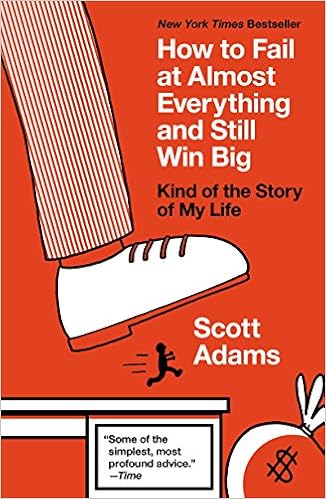
How to Fail at Almost Everything and Still Win Big by Scott Adams

The full title includes: "Kind of the Story of My Life". Published in 2013.


Scott's recipe for happiness, condensed:
Healthy diet -> Energy -> Exercise -> More energy -> Learn new skills -> Flexible schedule

"Goals are for losers and systems are for winners"

Forcing yourself to do something, for example to eat right, or to exercise, takes a lot of willpower. The trick is to set up yourself and your environment, so the things that you want to achieve come without effort. How to do that? For eating: you could stack your fridge with healthy foods, use spices to make them taste great. For exercise: you need a routine - exercise must be done every day and must be pleasant. You should not overdo it the first day, and then be in pain for a few days.

I grew up in an environment that was setup for more healthy living:

  • The pantry with the best food (sweets, sausages) was locked. My snacks were carrots and apples.
  • I walked to school, shops, church. I took a train when going farther away.
  • I played with other kids in the streets, in a park, and on school grounds.

Polish Proverbs - Part Three

1. Starych drzew się nie przesadza. Old trees are not to be replanted. Old people should not be uprooted. They should live out their days in a familiar environment.

2. Cicha woda brzegi rwie. Quiet water rips the banks (of a river). The quiet ones are sometimes the most adventurous.

3. Podróże kształcą. Journeys educate.

4. Cudze chwalicie, swego nie znacie. You are praising others' (things or customs), you don't know yours'. You are praising foreign things, and you are unaware of your country's achievements.

5. Potrzeba matką wynalazku. A need is a mother of invention.

6. Głodnemu chleb na myśli. A hungry person's thoughts are about bread. 

7. Lepiej późno niż wcale. Better late than never.

8. Pan Bóg nie rychliwy, ale sprawiedliwy. God is not quick, but fair/just. Similar to "You reap, what you sow".

9. Przyganiał kocioł garnkowi. The cauldron critiqued the pot. I understood it about the big one criticising the small one, while doing the same thing. It seems that it is not about the size, but about getting dirty. The full version of the saying is "Przyganiał kocioł garnkowi, a sam smoli" - the cauldron critiqued the pot, but it is sooting too.

10. W gorącej wodzie kąpany.  He who had a bath in hot (too hot) water. A quicksilver. Somebody who is quick to react, usually overreact, do something without thinking it trough.

11. Czego oczy nie widzą, tego sercu nie żal. What the eyes don't see, the heart does not regret. Sometimes it is better not to see or know about something.

See also: Polish Proverbs - Part One, Polish Proverbs - Part Two


Tuesday, August 25, 2015

Fighting Passports

I was thinking about passports from various countries yesterday and I noticed a funny thing. Some countries have "fighting" or "warrior" emblems on passports, others not so much. I wonder if there is any correlation between the symbols of the country and how its citizens see themselves, or how would they react if their country was attacked.

Some "fighting passports":

U.S.A:
An eagle with an olive branch and a bunch of arrows. Your choice punk.


Russia:

An eagle with two heads and a mace in one leg - does it say: do not mess with me? I think it does.

Less aggressive, but still showing muscle:

Poland:

An eagle with massive talons, not little "hands".
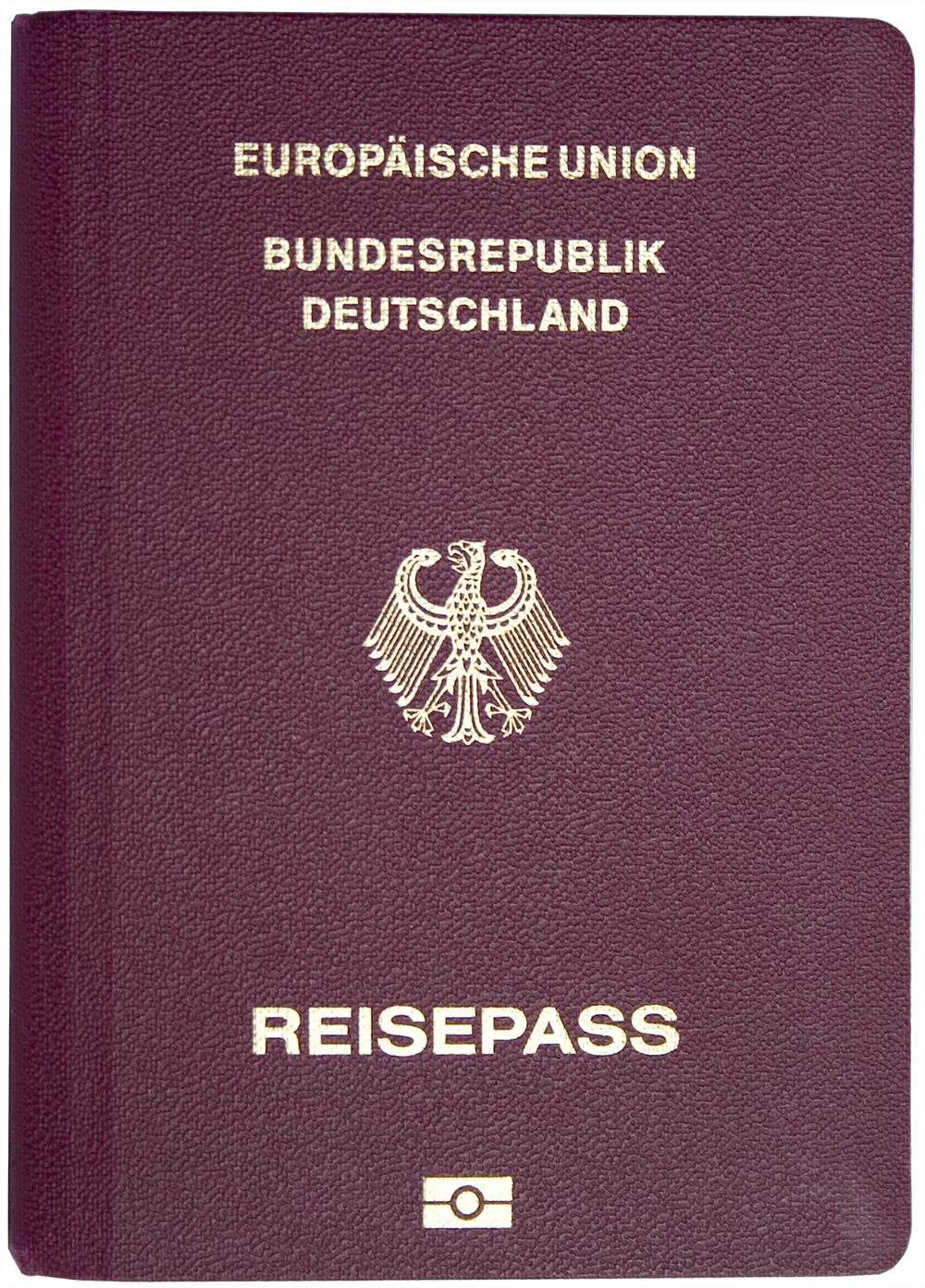
Germany:
Still an eagle, but smaller - Germany is a pacifist country now.

Not aggressive at all:

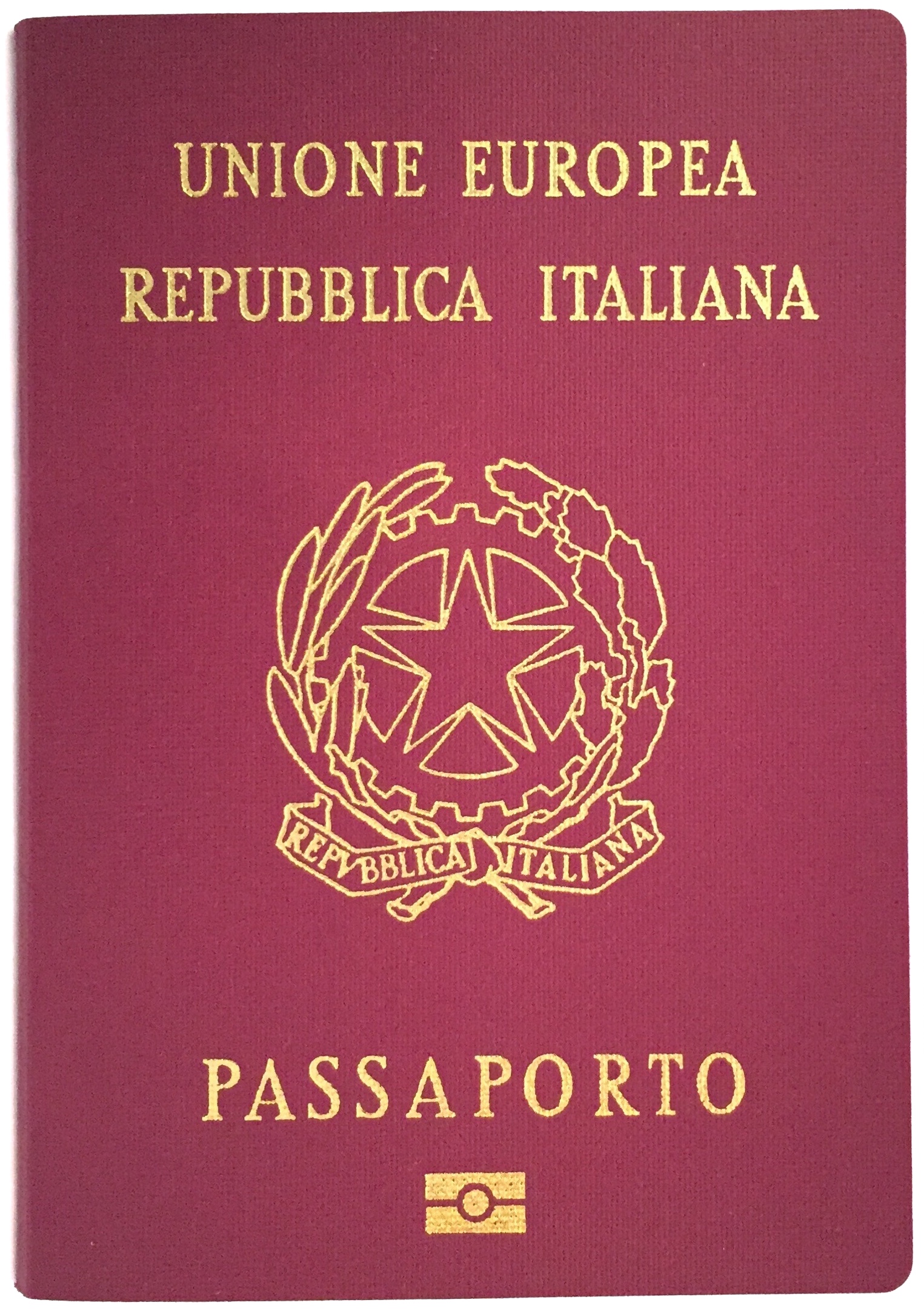
Italy:
Leaves, gear, and a star - look like a communist emblem. Not scary in itself.

France:


A rolling pin and a little axe - kitchen tools. :-)